You know the story; somehow, they discovered your email address and they just keep sending you sales junk. It is not malicious, but you just want them to stop. Your back-end systems are not filtering them out, so it is down to you to resolve it.
Strategies
There are two strategies that you can deploy. The first is to filter out messages yourself, the second is to ask them to desist. Both methods are really easy and work well.
In Outlook, filter the junk
Whilst it is easy to just hit delete when you encounter spam, over time you will waste many hours manually filtering out this rubbish when Outlook can do this for you. So next time one comes through:
- Right-click and select Junk
- Then Block Sender
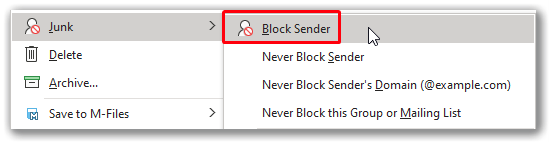
Their emails will then be automatically routed into your Junk folder which you can clean out from time to time.
Asking them to stop
In the UK we have a service called the Mailing Preference Service. Legitimate businesses sign up to it as it reduces their costs by ensuring that they only market to people who are receptive to it. Anyone can sign-up and within a few weeks you will find that you have far less junk mail coming through your door. There is also a Telephone Preference Service to reduce the cold calls to your phone. I have signed up to both and found them to be effective, as it is against the law for companies to make unsolicited contact with consumers. Sadly, there is currently no equivalent service covering junk email in the UK, but there is still one measure that you can take, which I have found to be very effective.
Unsubscribe
The Consumer Protection from Unfair Trading Regulations 2008 makes it clear that an organisation is guilty of an offense if it repeatedly contacts someone when they have asked not to be contacted.
I use the simple steps below:
- I reply to the sender with the subject line UNSUBSCRIBE. I don’t include any text in the message body and delete my email signature before sending as that includes my mobile phone number. So, they receive a blank email with just a subject line of UNSUBSCRIBE.
- I then file both the incoming and outgoing messages into my UNSUBSCRIBE folder.
It may be months later that they next write, and I would ordinarily struggle to remember whether the sender has received an UNSUBSCRIBE message from me, but I use Excitech Mail to file the messages and it’s like a computerised personal assistant, as I only have to select the email and it instantly shows me where I last filed messages like this.
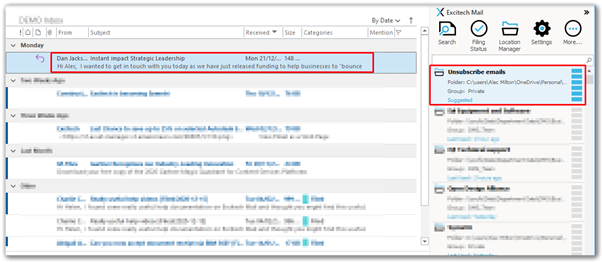
So, my next reply states that I sent them an unsubscribe request on [date] and under The Consumer Protection from Unfair Trading Regulation 2008 they are now breaking the law. I then additionally insist that they remove my details from their database which they are required to do under the GDPR regulations.
I never hear from them again.
Excitech Mail
You do not need a tool like Excitech Mail to do this but its ability to guide where to file messages based on your previous filing behaviours is a massive time saver.
To learn more take a look at our website: https://www.symetri.co.uk/products/excitech-mail or please contact email us at info@symetri.co.uk for more information.