
How Company Certification Has Evolved
Ten years of BIM certification experience. Learn how ISO 19650 certification has matured, its business benefits, and when organisations are ready.

AutoCAD provides a SCALE command that can be useful when we want to scale a drawing by a constant factor. On some occasions, we may want to use a different factor for each axis. A typical example is when we have a model where the dimensions in the plan are in millimetres but the elevations are specified in metres, and we want to convert it to metres for all three axes.

The following simple workflow will help us achieve that goal:
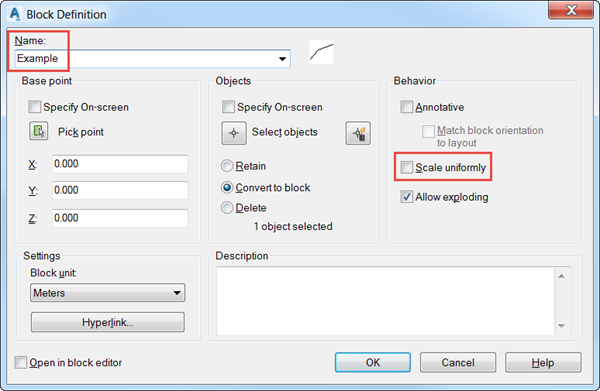
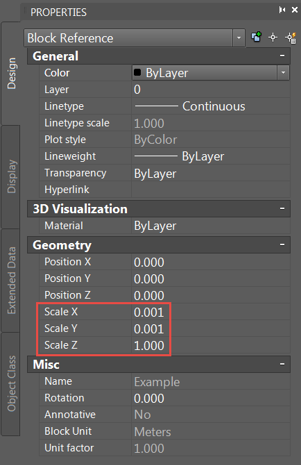
The block will automatically update to the scale factors that have been selected. If you don’t want it to stay as a block, you can just select it and type X in the command line. That will explode the block and the original entities will come back to the drawing, now scaled with the factors previously selected.
We hope you found this tip useful. Check back on our blog for more tips & tricks to keep you productive.
We offer a number of different AutoCAD training courses aimed at different levels and skillsets.
If you want to find out more about this topic, please call us on 0345 370 1500 and ask for the CAD Support Team.
Ten years of BIM certification experience. Learn how ISO 19650 certification has matured, its business benefits, and when organisations are ready.

Digital transformation is reshaping the built environment, but successful change requires more than new technology. Discover how Symetri's approach to BIM, digital delivery and organisational change has earned four nominations at the 2026 Building Innovation Awards.
If you're new to Bluebeam Max or simply want to learn more about what it can do, we've gathered answers to the questions we're asked most often.