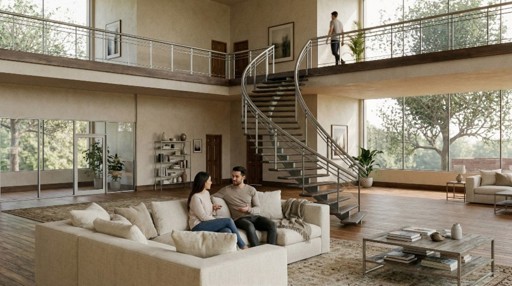
 Visualisation has changed dramatically over the past twenty five years. What began as slow, CPU bound rendering has evolved into real time, GPU accelerated workflows powered by global illumination and advanced ray tracing. With so many powerful tools now available, choosing the right rendering engine has become a crucial decision for architects, designers, and visualisation specialists. Among the leading options, Chaos offers two standout solutions - Chaos V-Ray and Chaos Corona - each delivering exceptional photorealism in its own way. Here’s how they compare.
Chaos V-Ray: The All-Round Rendering Solution
- Integration: Available as a plugin for major platforms including 3ds Max, SketchUp, Rhino, Revit, Maya, Cinema 4D, Houdini, and Unreal Engine.
- Rendering Style: Hybrid CPU/GPU rendering with advanced ray tracing, global illumination, caustics, and physically accurate shaders.
- Strengths:
- Handles large, complex scenes with billions of polygons.
- Offers interactive rendering for quick previews.
- Trusted across industries - architecture, product design, film, and VFX.
- Best For: Professionals who need flexibility, scalability, and cinematic-quality visuals.
Chaos Corona: The Intuitive Renderer
- Integration: Available as a plugin for Autodesk 3ds Max and Maxon Cinema 4D.
- Rendering Style: CPU-based rendering optimised for simplicity and ease of use.
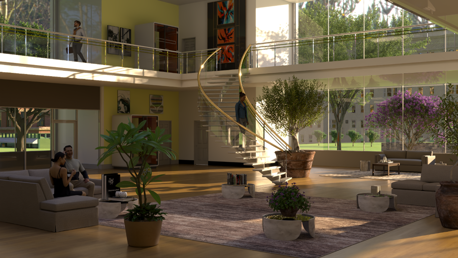 Strengths:
- Intuitive interface with minimal setup.
- Outstanding lighting capabilities, producing lifelike interiors quickly.
- Ideal for beginners yet robust enough for professional studios.
- Best For: Architects and interior designers who want fast, predictable results without steep learning curves.
Conclusion
Both renderers deliver photorealistic results, but the choice depends on your workflow:
- Choose Chaos V-Ray if you need scalability, flexibility, and integration across multiple industries.
- Choose Chaos Corona if you prioritise simplicity, speed, and intuitive workflows, especially for interiors and architectural visualisation.
Together, they represent two sides of the Chaos ecosystem: V-Ray as the all-round rendering solution, and Corona as the intuitive specialist.
From my own experience supporting architects and interior designers, workflow is a crucial factor. Corona often proves to be the faster “out‑of‑the‑box” option for creating interior mood renders with minimal setup. V‑Ray, on the other hand, is my go‑to for larger projects that span interiors and exteriors, especially when animation is involved. It’s also the renderer I prefer for broadcast and film‑quality visuals where OCIO colour management is essential.
Blog Series:
This blog is the third in a four part series: